
 Save to Pinterest
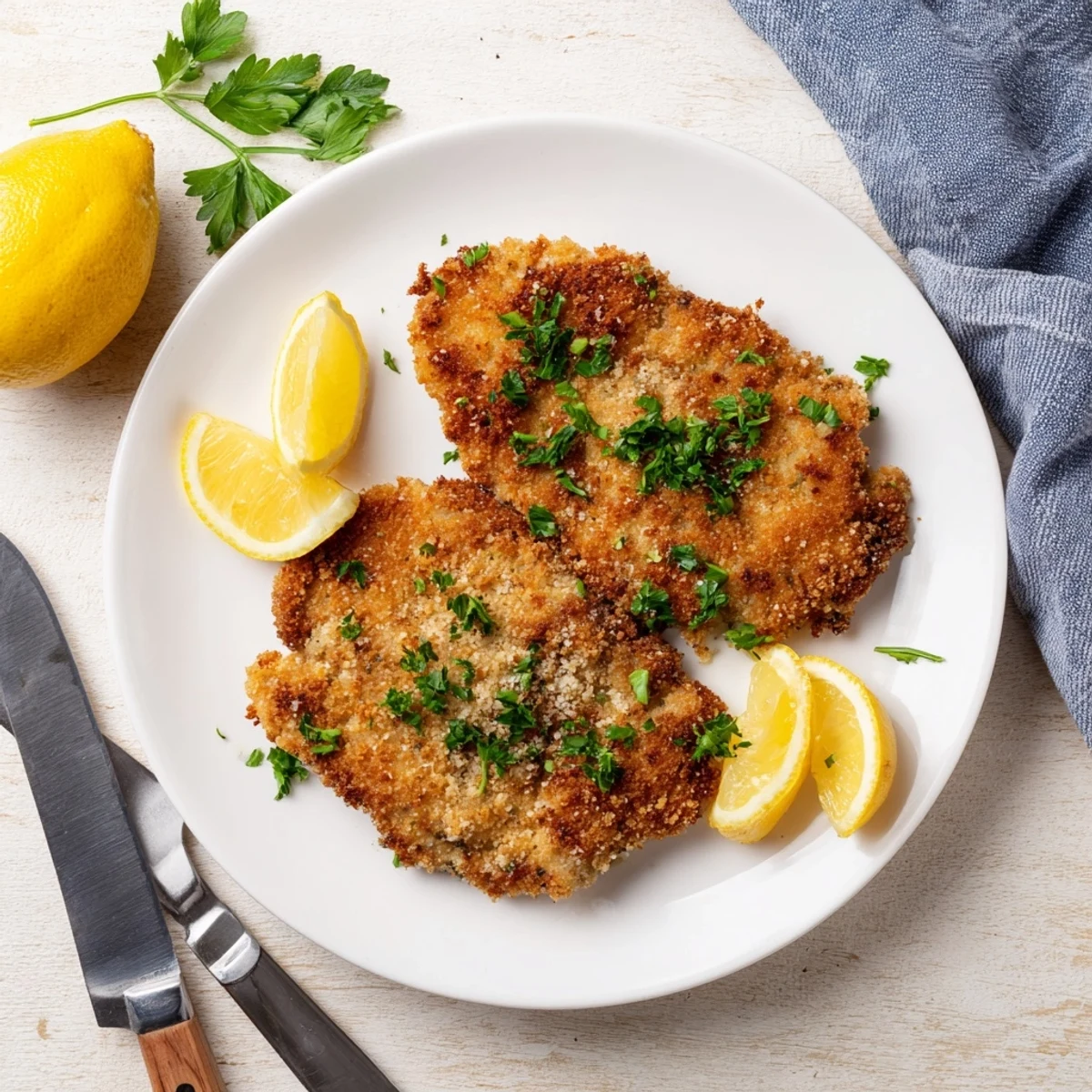
 Tender beef escalopes are pounded thin and coated in a three-step breading process: seasoned flour, egg wash, and a crispy mixture of panko breadcrumbs with grated Parmesan. Pan-fried in oil and butter until golden brown, these cutlets develop a satisfying crunch while staying juicy inside. The preparation takes just 20 minutes before hitting the pan, and each side cooks for 2-3 minutes to achieve that perfect golden crust. Serve immediately with fresh lemon wedges and chopped parsley for a bright finish.
The sound of panko breadcrumbs hitting hot oil still takes me back to my tiny first apartment kitchen, where I learned that Italian comfort food doesn't need hours of simmering. I'd pound the beef thin with whatever heavy object I could find—usually a coffee mug turned on its side—while my neighbor's garlic bread toasted next door. Something about that golden crunch cutting through tender meat makes even a Tuesday dinner feel like a special occasion.
Last summer, my sister came over exhausted from a new job, and I made these escalopes while she sat at the counter recounting her day. The kitchen filled with that incredible fried-but-fresh aroma, and we ended up eating standing up, leaning against the stove, squeezing lemon wedges over our plates between laughs. Sometimes the best meals aren't the ones with table settings and napkins—they're the ones where the food is so good you forget to sit down.
Ingredients
- Beef escalopes: Thinly pounded beef cooks quickly and evenly, giving you that perfect tender-crisp contrast in every bite
- Panko breadcrumbs: These Japanese breadcrumbs create an airier, crunchier coating than traditional breadcrumbs—they're what make restaurant schnitzel so light
- Parmesan cheese: Grated right into the crust adds this incredible savory depth that pairs perfectly with the lemon finish
- Butter and oil: The combination gives you the high heat needed for crisping while butter adds that rich, golden flavor and color
- Lemon wedges: Absolutely essential—the bright acid cuts through the fried coating and transforms the whole dish
Instructions
- Pound the beef:
- Place each escalope between plastic wrap and gently pound until about 0.5 cm thick—this ensures even cooking and maximum tenderness.
- Set up your breading station:
- Arrange three shallow dishes: flour mixed with salt and pepper, beaten eggs whisked with milk, and panko combined with grated Parmesan.
- Coat each piece:
- Dredge escalopes in flour, shake off excess, dip in egg mixture, then press firmly into the breadcrumb mixture to coat completely.
- Get your pan ready:
- Heat oil and butter in a large frying pan over medium-high heat until the butter foams slightly—that's your cue it's hot enough.
- Fry to golden perfection:
- Cook each escalope 2 to 3 minutes per side until deep golden brown and crispy, working in batches so the pan doesn't get crowded.
- Rest and serve:
- Drain on paper towels for a minute, then immediately serve with chopped parsley and fresh lemon wedges.
 Save to Pinterest
 My friend Marco, who spent a semester in Milan, says this dish reminds him of standing-room trattorias where the chef's wife would personally squeeze lemon over your plate. Now whenever I make it, I think about food's power to transport us somewhere we've never been—or somewhere we wish we could return to.
Make It Your Own
I've tried swapping in veal or chicken when beef felt too heavy, and honestly, the technique works beautifully with any thin cutlet. The key is keeping that panko-Parmesan coating exactly as written—it's the soul of the dish. Sometimes I'll add a pinch of garlic powder to the flour if I'm feeling adventurous, but purists might argue that's crossing a line.
What To Serve Alongside
A crisp arugula salad dressed simply with olive oil and more lemon is all you really need—something fresh to balance the rich, crispy main. But I've also served it with roasted cherry tomatoes or just some steamed green beans when I want something warm. The beauty is that this beef feels substantial enough to stand alone with just a simple vegetable on the side.
Leftovers Actually Work Here
Unlike fried foods that turn sad and soggy overnight, these escalopes reheat surprisingly well in a hot oven or toaster oven. They'll never be quite as perfect as fresh-from-the-pan, but they're still completely delicious for lunch the next day. I've been known to make extra just to have an elevated sandwich situation with cold leftovers.
- Store in the fridge with paper towels between layers
- Reheat at 200°C for about 8 minutes to restore crispiness
- A quick squeeze of fresh lemon wakes everything back up
 Save to Pinterest
 Some dishes are about technique, others are about ingredients, but this one is about that moment when hot, crispy, tender food hits your plate and everyone around the table gets quiet for a second.
Recipe Questions & Answers
- → What cut of beef works best for escalopes?
-
Look for top round, sirloin, or flank steak that can be pounded thin. The key is starting with lean, tender cuts that pound easily to about 0.5 cm thickness without tearing.
- → Can I prepare these ahead of time?
-
You can bread the escalopes up to 4 hours ahead and refrigerate them on a parchment-lined tray. Fry them just before serving for the crispiest results. Leftovers can be reheated in a 375°F oven for 10 minutes.
- → What makes panko different from regular breadcrumbs?
-
Panko are Japanese-style breadcrumbs with a larger, flakier texture. They create a lighter, airier crust that stays crunchier longer than traditional fine breadcrumbs. Combined with Parmesan, they add exceptional flavor and texture.
- → How do I prevent the breading from falling off?
-
Ensure each escalope is dried before dredging. Shake off excess flour, let egg mixture drain slightly, and press breadcrumbs firmly onto the meat. Let breaded cutlets rest for 5 minutes before frying to help coating adhere.
- → What sides complement this dish?
-
A crisp arugula salad with lemon vinaigrette cuts through the richness. Roasted vegetables, sautéed spinach, or light pasta dishes work beautifully. The wine pairing notes suggest Pinot Grigio or light Chianti to balance the flavors.
- → Can I use other proteins?
-
Veal escalopes are traditional for Milanese, and boneless chicken breasts work excellently too. Adjust cooking time slightly—chicken may need an extra minute per side to cook through completely.