
 Save to Pinterest
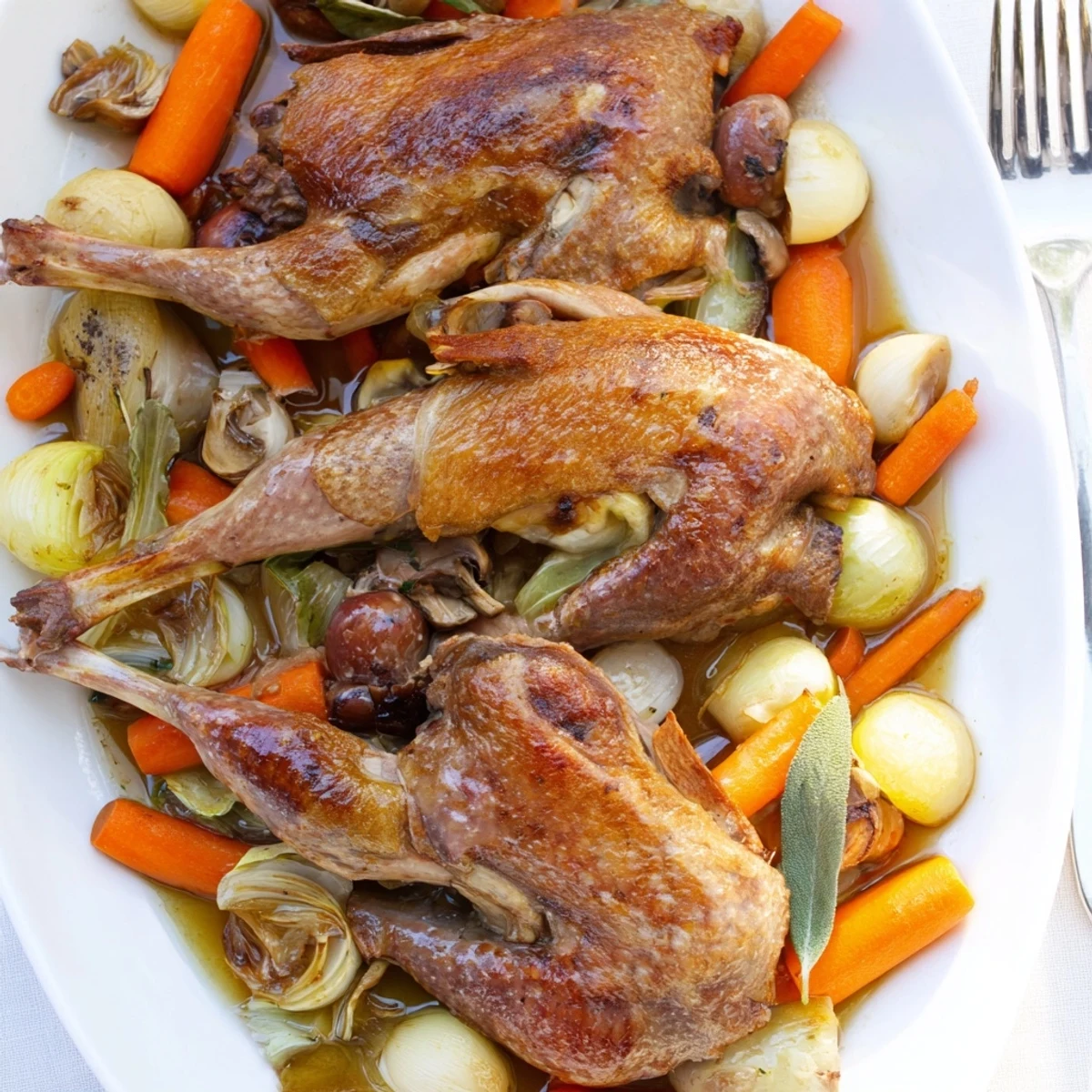
 This method braises duck pieces in a honey-soy and white wine jus with aromatics and root vegetables until meltingly tender, then raises the oven to crisp the skin to a golden finish. Allow about 2.5 hours total: sear, braise covered 1.5-2 hours, then roast uncovered to render fat and crisp. Rest briefly before serving to let juices settle.
The first time I made duck, I accidentally set off every smoke alarm in my apartment building. My landlord still asks about 'that duck incident' whenever we cross paths. But that overambitious dinner taught me something important: the best dishes often require a little chaos. Now I know better, but I still love watching that skin transform from rubbery to glassy-crisp.
I served this at a winter dinner party last year, right when snow started falling outside. Everyone went quiet when they took their first bites. There is something deeply satisfying about serving a dish that looks like it required three days of work, even if you are not going to tell them it was mostly hands-off oven time.
Ingredients
- 1 whole duck (about 2 kg), cut into 4 pieces: Ask your butcher to cut it, or use kitchen shears to split through the backbone and breastbone
- 1 tsp kosher salt and ½ tsp black pepper: Season generously and at least an hour before cooking if possible, this helps the skin crisp
- 250 ml dry white wine and 500 ml chicken stock: The wine adds acidity while the stock provides body, together creating a braising liquid that becomes sauce
- 2 tbsp soy sauce and 2 tbsp honey: This combination gives the sauce that perfect balance of salty-sweet that makes you want to spoon it over everything
- 2 bay leaves, 5 sprigs fresh thyme, 4 cloves garlic, 1 large shallot: These aromatics perfume the duck as it braises, infusing every bite
- 3 large carrots, 2 parsnips, 1 large leek, 200 g baby potatoes, 200 g button mushrooms: Cut vegetables into generous chunks, they will shrink during braising and you want them to hold their shape
- 1 tbsp neutral oil: For the final crisping step, this helps the skin brown evenly without burning
Instructions
- Preheat and prep the duck:
- Heat your oven to 170°C and pat the duck pieces completely dry with paper towels, then season them generously with salt and pepper on all sides.
- Sear the duck for flavor:
- In a large Dutch oven over medium heat, place the duck skin-side down and let it sizzle undisturbed for 5 to 7 minutes until deeply browned and fat has rendered out, then flip and cook the other side for 2 to 3 minutes more.
- Build the vegetable base:
- Pour off all but 2 tablespoons of the rendered fat, then add shallots, garlic, and leeks, cooking until fragrant before stirring in carrots, parsnips, potatoes, and mushrooms to coat them in fat.
- Create the braising liquid:
- Pour in the white wine and scrape up any browned bits from the bottom of the pan, then add chicken stock, soy sauce, honey, bay leaves, and thyme, stirring everything together.
- Braise until tender:
- Nestle the duck pieces skin-side up on top of the vegetables, bring to a simmer, cover tightly, and transfer to the oven for 1 hour and 30 minutes until the duck is tender.
- Crisp the skin:
- Remove the lid, increase the oven temperature to 220°C, brush the duck skin with neutral oil, and roast uncovered for 15 to 20 minutes until the skin is golden and crackling-crisp.
 Save to Pinterest
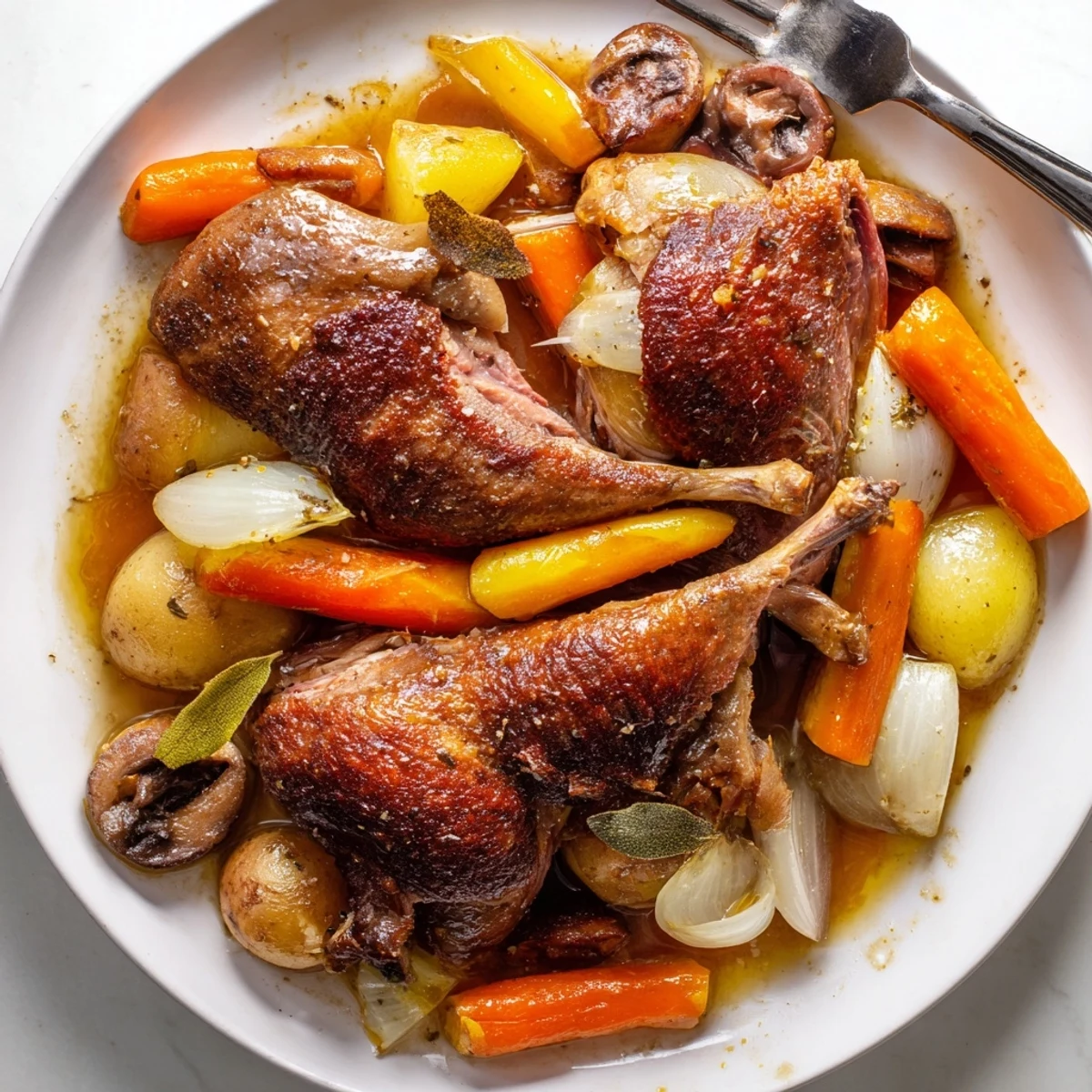
 My partner claims this duck is the only thing I have made that actually made them stop scrolling through their phone during dinner. High praise in our house. The way the crackling skin shatters when you bite into it, then gives way to meat that falls apart at the touch of a fork, that is restaurant-level stuff right there.
Making Ahead
You can braise the duck up to two days in advance and refrigerate it in the cooking liquid. The flavors actually improve with time. When ready to serve, bring it to room temperature, then crisp the skin in a hot oven for that fresh-cooked texture.
Choosing Your Vegetables
Root vegetables work best here because they hold up to long braising without falling apart. I have experimented with adding celery root or turnips when they are in season. Just keep the pieces roughly the same size so they cook evenly.
Serving Suggestions
A simple green salad with a sharp vinaigrette cuts through the richness beautifully. I also love serving crusty bread to soak up those braising juices. A glass of Pinot Noir or an earthy red wine brings everything together.
- Sprinkle fresh parsley or thyme over the finished dish for color
- Extra sea salt on the crisp skin right before serving makes it shine
- Lemon wedges on the side let guests brighten their own portions
 Save to Pinterest
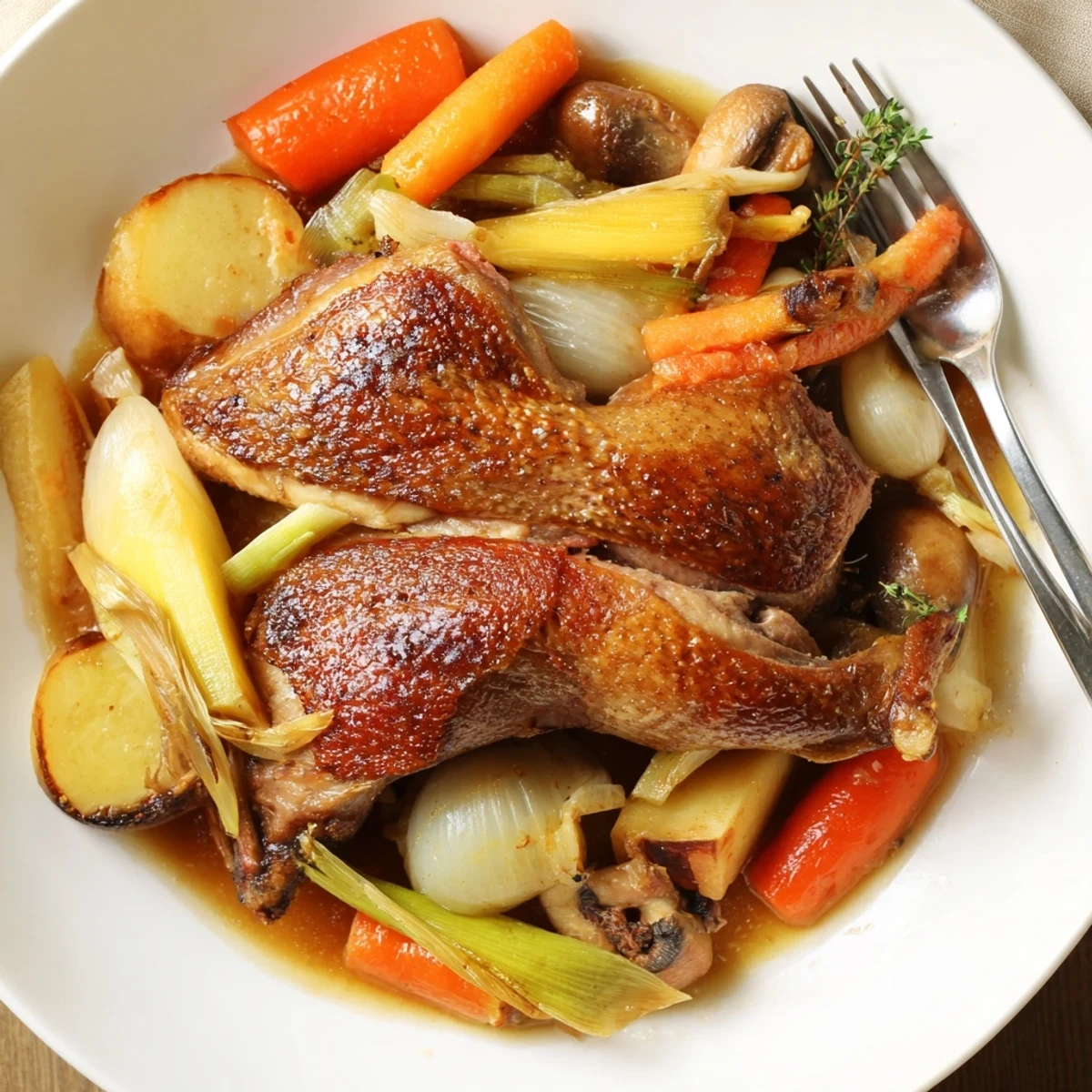
 This is the kind of meal that makes people remember why they love having friends over for dinner. Enjoy every bite of that crisp skin.
Recipe Questions & Answers
- → How do I get the skin extra crispy?
-
Pat the skin thoroughly dry before searing and leave a layer of rendered fat in the pan. After braising, increase oven heat, brush skin lightly with a neutral oil and roast uncovered until golden and crisp.
- → How can I tell when the duck is tender?
-
Check with a fork: meat should pull apart easily and feel very soft near the bone. A gentle probe should meet little resistance after the long, covered braise.
- → Can I swap the vegetables?
-
Yes. Use sturdy root vegetables such as turnips, celery root or sweet potato. Cut them into similar-sized chunks so they soften evenly during braising.
- → What is a good wine pairing?
-
Pair with a medium-bodied red like Pinot Noir or a fuller red with bright acidity to balance the honey-soy braising jus and rich duck fat.
- → How to keep the braise gluten-free?
-
Use tamari or a certified gluten-free soy sauce and verify the chicken stock label for hidden gluten-containing ingredients.
- → Can this be made ahead and reheated?
-
Yes. Braise fully, cool slightly, then refrigerate. Reheat gently in the oven in the braising liquid, then finish under high heat to re-crisp the skin just before serving.