
 Save to Pinterest
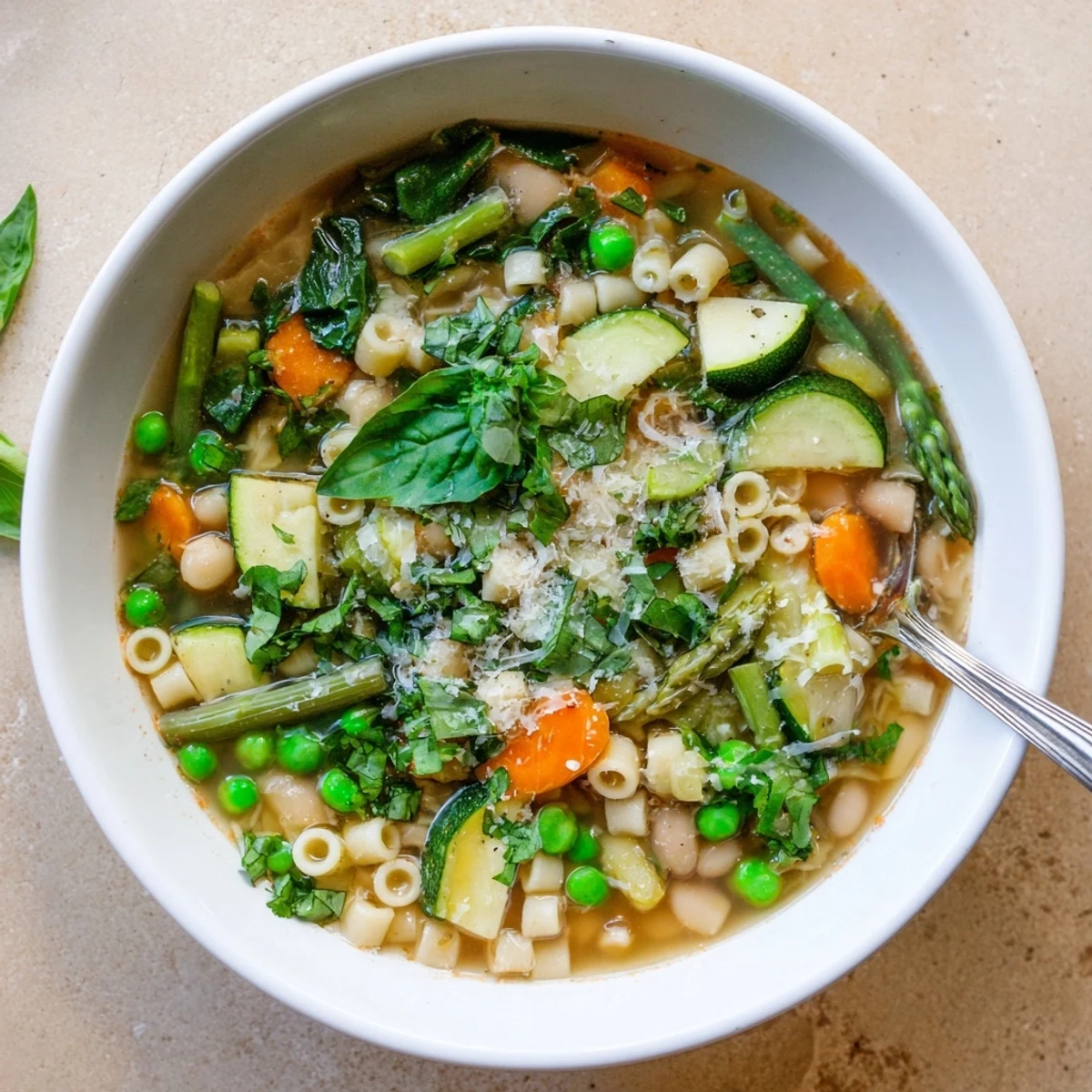
 This spring minestrone brings together asparagus, zucchini, peas, and baby spinach in a savory vegetable broth with cannellini beans and small pasta. Finished with fresh basil, parsley, and a splash of lemon juice, it comes together in under 45 minutes. The result is a bright, nourishing bowl that celebrates seasonal produce with classic Italian flavors. Top with grated Parmigiano Reggiano and serve alongside crusty bread for a satisfying weeknight meal.
There was a morning last April when I opened the farmers market bag on my kitchen counter and just stared at the pile of green: asparagus tips, sugar snap peas, a bundle of basil so fragrant it filled the whole room. I had no plan, but that pile basically told me what to do. Within an hour, the pot was bubbling and the windows were open, and it felt like the kitchen finally caught up with the season outside.
I made this for my neighbor Sara on a rainy Tuesday when she was recovering from a cold. She texted me the next morning saying it was the first thing she had actually tasted in days. That kind of quiet reaction means more than any compliment.
Ingredients
- Olive oil: A good extra virgin makes a real difference here since the fat carries the flavor of every vegetable that follows
- Onion: Finely chopped so it melts into the broth base instead of staying chunky
- Garlic: Minced fresh, never jarred, because the sweetness matters in a light soup like this
- Carrots: Diced small so they cook through at the same rate as the softer vegetables
- Asparagus: Cut into one inch pieces, and use only the tender parts of the stalk
- Zucchini: Diced to match the carrot size for even cooking and a cleaner look
- Peas: Fresh shelled if you can find them, but frozen work beautifully in a pinch
- Baby spinach: Added at the very end so it keeps its bright color and soft texture
- Vegetable broth: A quality low sodium brand gives you control over the final seasoning
- Cannellini beans: Drained and rinsed well to keep the broth from getting cloudy
- Small pasta: Ditalini or orzo both work, just avoid anything too large that steals the show
- Salt and pepper: Season in stages rather than all at once for more balanced flavor
- Fresh basil and parsley: Chopped right before adding so their oils stay intact Fresh lemon juice: Just one tablespoon wakes up every single ingredient in the pot
- Parmigiano Reggiano: Optional, but a sparse grating on top turns it into something special
Instructions
- Build the base:
- Heat the olive oil in a large pot over medium heat, then add the chopped onion and let it soften for about three minutes until it turns translucent and sweet.
- Add the aromatics:
- Toss in the garlic and diced carrots, stirring for two to three minutes until the garlic smells incredible and the carrots just start to soften.
- Bring in the spring vegetables:
- Stir in the asparagus, zucchini, and peas, cooking for another two minutes so everything gets coated in that flavored oil.
- Simmer with broth and beans:
- Pour in the vegetable broth and bring it to a boil, then add the cannellini beans and pasta, reduce the heat, cover, and simmer for eight to ten minutes until everything is tender.
- Finish with greens and herbs:
- Stir in the baby spinach, basil, and parsley, cooking just one to two minutes until the spinach wilts and the herbs release their aroma.
- Season and serve:
- Remove the pot from heat, stir in the lemon juice, adjust salt and pepper to taste, then ladle into bowls with a optional grating of Parmigiano Reggiano on top.
 Save to Pinterest
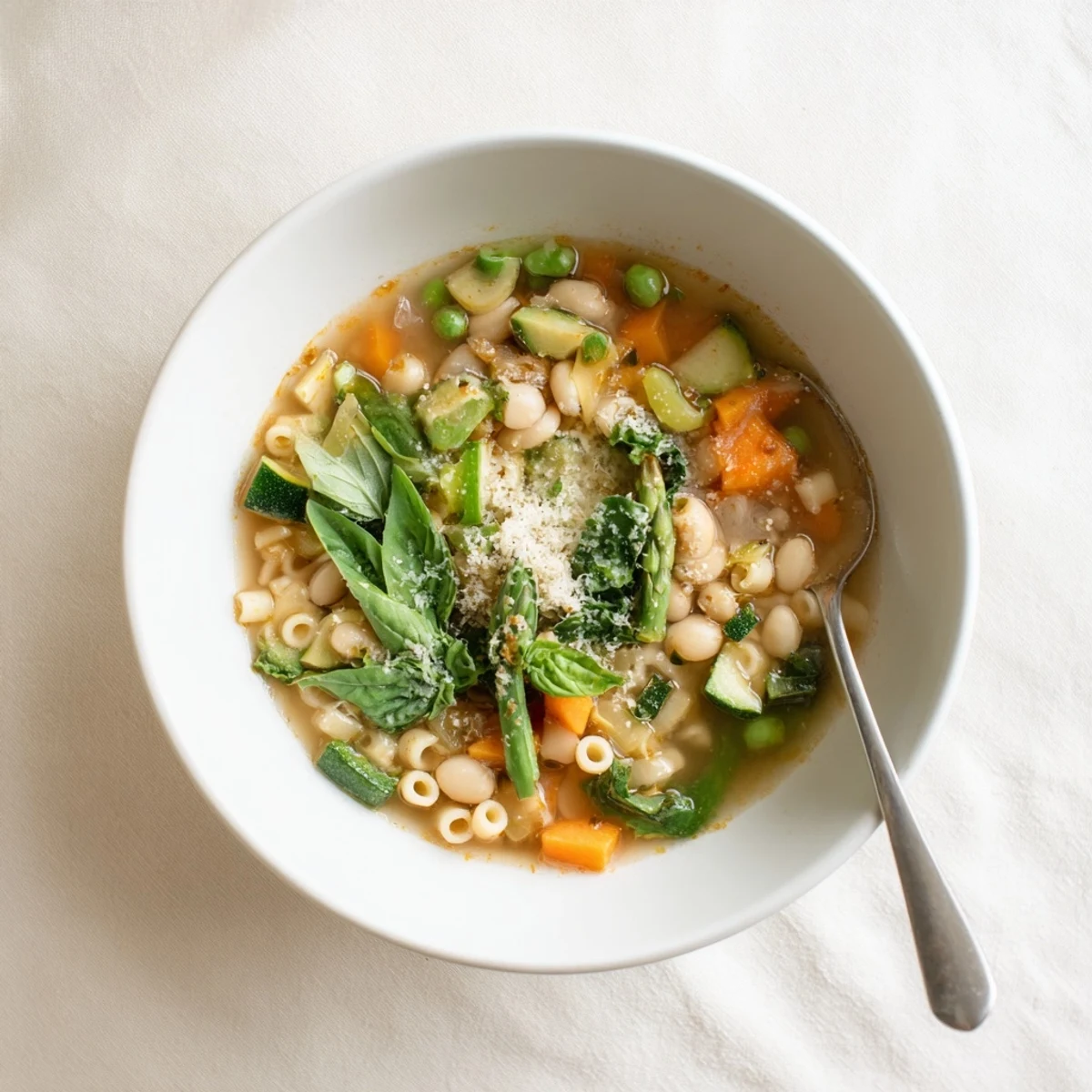
 My mother in law, who barely cooks, asked for the recipe after one bowl and now makes it every Sunday in spring. She swaps in fava beans sometimes, and honestly her version might be better than mine.
Picking the Right Vegetables
The beauty of this soup is its flexibility. I have used green beans, sliced leeks, and even diced radishes when the market had them. The rule is simple: anything tender and quick cooking belongs in this pot.
Broth Matters More Than You Think
I used to grab whatever broth was on sale and wonder why my soups tasted flat. Switching to a good quality vegetable broth changed everything, and now I keep a few cartons of my favorite brand stocked at all times.
Making It Your Own
This recipe is a starting point, not a rulebook. I have added a pinch of red pepper flakes when I wanted warmth and swapped the pasta for rice when a friend needed gluten free.
- Try a drizzle of good olive oil on top instead of cheese for a vegan finish
- A hunk of crusty bread for dipping is basically mandatory
- Leftovers taste even better the next day once the flavors settle
 Save to Pinterest
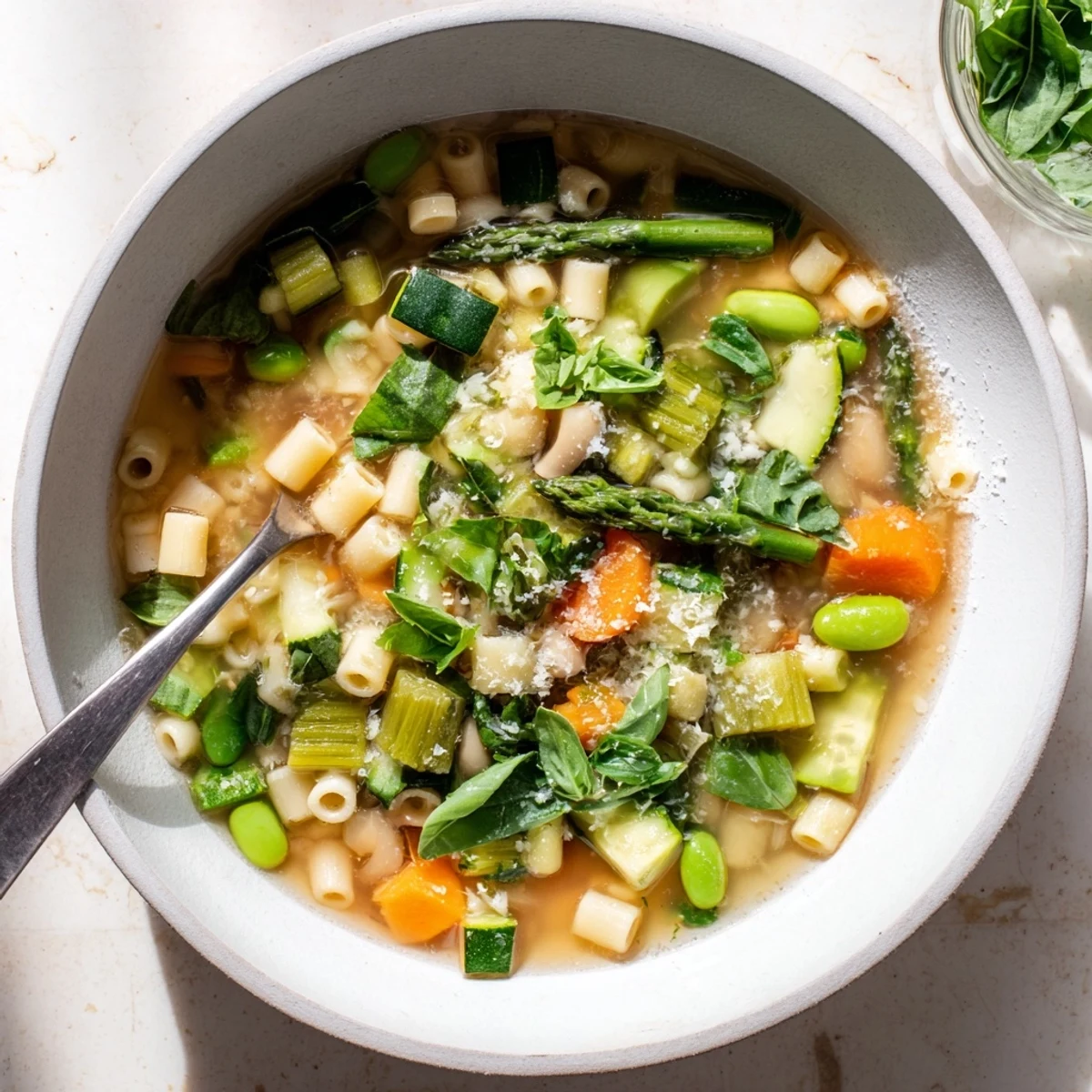
 This soup is the reason I keep checking the farmers market every spring, hoping that pile of green shows up again. Some recipes feed you, and this one somehow wakes you up.
Recipe Questions & Answers
- → What vegetables work best in spring minestrone?
-
Asparagus, zucchini, peas, and baby spinach are ideal. You can also add fava beans, green beans, or leeks depending on what's fresh and available.
- → Can I make this minestrone vegan?
-
Yes, simply omit the Parmigiano Reggiano garnish or replace it with a plant-based cheese alternative. The soup itself is entirely vegetarian and easily made vegan.
- → What type of pasta should I use?
-
Small shapes like ditalini or orzo work best because they cook quickly and fit nicely on a spoon. Any small pasta will do—just adjust cooking time if needed.
- → How long does spring minestrone last in the fridge?
-
Stored in an airtight container, it keeps well for up to 3 days. The pasta may absorb some broth, so add a splash of water or broth when reheating.
- → Can I freeze this soup?
-
Yes, it freezes for up to 3 months. For best results, slightly undercook the pasta before freezing, as it will soften further when reheated.
- → What pairs well with spring minestrone?
-
Crusty bread is a natural companion. A light white wine like Pinot Grigio complements the fresh, herbal flavors nicely.